Open to research collaborations

Researching...

Chirantan Ghosh - AI Researcher, Full-stack engineer, and Founder.

Scroll
Retrieval & RAG
Agent Systems
LLM Evaluation
Distributed Training
Inference Infra
Model Distillation
Production ML
Applied Research
Retrieval & RAG
Agent Systems
LLM Evaluation
Distributed Training
Inference Infra
Model Distillation
Production ML
Applied Research
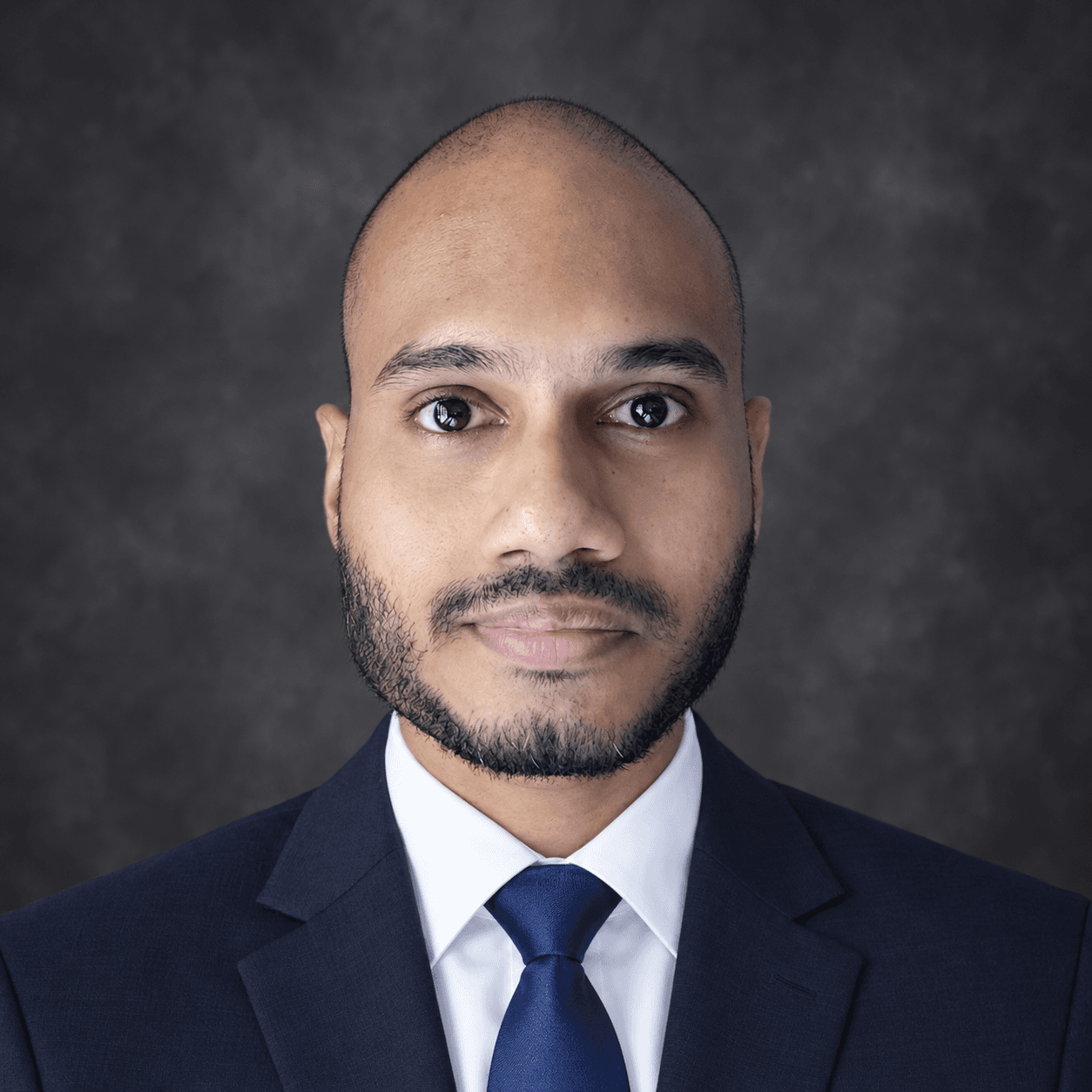
Portrait of Chirantan Ghosh — placeholder, replace with real photo at public/person.jpg
Researcher · Engineer · FounderAI · ML · CV . RS . DL
About

Researcher who publishes.
Engineer who ships. Founder who builds.

Chirantan Ghosh is the founder of RootNous & OriginSci, where he drives both foundational and applied research in computer vision, machine learning, deep learning, remote sensing, and robotics. His work investigates how machines can perceive, interpret, and act within the physical world — spanning from fine-grained analysis of earth-observation imagery to the control of autonomous systems. Prior to establishing RootNous, Chirantan focused on optimizing machine learning algorithms and published peer-reviewed studies on earth data. His interests lie in perceptual pattern recognition combined with structured reasoning, and in bridging rigorous research with deployable solutions across environmental, medical, and autonomous-systems domains. He is committed to open publication, while also transforming research breakthroughs into commercial products when discoveries are ready to move beyond the lab.
Building Software
Publishing Research papers
Filing Patents
Remote c@ed.uy Open to collaborations
Research & work

Papers, repos,
and a company.

PRODUCT · 01

RootNous

Founder . 2023 - present

R&D in AI and related fields.

0 → 1AIMLDeep LearningComputer VisionRoboticsRemote SensingApplied ResearchResearch & Development
PRODUCT · 02

OriginSci

Founder . 2026 - present

Open Science Initiative in AI and related fields.

0 → 1AIMLDeep LearningComputer VisionRoboticsRemote SensingApplied ResearchResearch & Development
PAPER · 03

A methodological framework for improving the performance of data-driven models: a case study for daily runoff prediction in the Maumee domain, USA

Geoscientific Model Development . 2023

Geoscientific models are simplified representations of complex earth and environmental systems (EESs). Compared with physics-based numerical models, data-driven modeling has gained popularity due mainly to data proliferation in EESs and the ability to perform prediction without requiring explicit mathematical representation of complex biophysical processes. However, because of the black-box nature of data-driven models, their performance cannot be guaranteed. To address this issue, we developed a generalizable framework for improving the efficiency and effectiveness of model training and the reduction of model overfitting. This framework consists of two parts: hyperparameter selection based on Sobol global sensitivity analysis and hyperparameter tuning using a Bayesian optimization approach. We demonstrated the framework efficacy through a case study of daily edge-of-field (EOF) runoff predictions by a tree-based data-driven model using the extreme gradient boosting (XGBoost) algorithm in the Maumee domain, USA. This framework contributes towards improving the performance of a variety of data-driven models and can thus help promote their applications in EESs.

MLHydrologyXGBoostSobolBayesian optimizationRunoff predictionEnvironmental modelingData-driven modelsOptimizationModel performance
PAPER · 04

Generalization of Runoff Risk Prediction at Field Scales to a Continental-Scale Region Using Cluster Analysis and Hybrid Modeling

Geophysical Research Letters . 2022

As surface water resources in the U.S. continue to be pressured by excess nutrients carried by agricultural runoff, the need to assess runoff risk at the field scale continues to grow in importance. Most landscape hydrologic models developed at regional scales have limited applicability at finer spatial scales. Hybrid models can be used to address the scale mismatch between model simulation and applicability, but could be limited by their ability to generalize over a large domain with heterogeneous hydrologic characteristics. To assist the generalization, we develop a regionalization approach based on the principal component analysis and K-means clustering to identify the clusters with similar runoff potential over the Great Lakes region. For each cluster, hybrid models are developed by combining National Oceanic and Atmospheric Administration's National Water Model and a data-driven model, eXtreme gradient boosting with field-scale measurements, enabling prediction of daily runoff risk level at the field scale over the entire region.

HydrologyRunoff predictionRegionalizationHybrid modelingCluster analysisGreat Lakes regionData-driven modelsMachine learningEnvironmental modelingField-scale predictioneXtreme gradient boostingPrinciple component analysisK-means clustering
PAPER · 05

Review of Key Image Denoising Algorithms

Preprint · 2025

Images are one of the key sources of visual information and communication. It plays a crucial role in defense, AI, and forensic science, among others. However, it is prone to corruption from various types of noise from varying sources, mainly during acquisition and transmission. It creates artifacts or signal distortion due to statistical variance in pixel-value measurements that affect contrast, color, and other aspects. Several denoising techniques exist, and many have been proposed to address it, but their performance is debatable. Noise leads to the loss of critical information, primarily edges and corners, which negatively affects performance. And there is no single, universal perfect solution to this problem. This paper reviews the existing techniques and analyzes the performance of three main techniques, namely Gaussian, linear, and non-linear isotropic smoothing. After careful examination, it is found that both Linear and Non-Linear smoothing can be an effective solution.

Image denoisingImage processingNoise reductionGaussian smoothingLinear smoothingNon-linear smoothingIsotropic smoothingSignal distortionEdge preservationCorner preservationcomputer visionAIForensic scienceImage quality assessment
Capabilities

Three hats.
One stack.

Most of the interesting problems live where research, engineering, and company-building stop being separate disciplines.

Research

Publish papers, open datasets, models and benchmarks alongside the code, and care about reproducibility more than leaderboard position.

Computer VisionRoboticsAgentsAIRemote sensingDeep LearningMachine Learning

Full-Stack Engineering

Production ML systems end-to-end: training pipelines, inference infra, eval harnesses, observability, and everything in between. Comfortable with Python, C++, TypeScript, etc.

PyTorchNext.jsPythonTSC++OpenCVRuby

Founder

Built and shipped products from zero to one. Comfortable writing the first commit, the first blog post, etc. - sometimes in the same week.

0 → 1GTMStrategy
Let's talk

Building something
intelligent?

Open to research collaborations, advisory roles, and the occasional founding conversation. If you're working on something hard at the seam between research and product, I'd love to hear about it.